
Finding, learning, or understanding chords/music theory shouldn’t be hard!
You may be a beginner fumbling through your first chord progression or a seasoned songwriter chasing that elusive key change, the right tools can completely transform how you understand, write, and perform music. Chord theory doesn’t have to feel like math class with the right creative tools in your corner, it becomes intuitive, even fun.
We curated a list of three practical tools and products designed specifically to help musicians work with chords more confidently: from transposing keys on the fly, to visualizing Roman numeral harmony, to capturing your chord ideas on paper the moment inspiration strikes.
- Transpos-O-Matic: Music Slide Rule
- Chordii – Roman Numeral (Chord Finder Music Theory Wheel)
- Blank Sheet Music – Manuscript Paper (40 Sheets) LOOSE LEAF 12-Staff Paper
Why Musicians Struggle with Chords & Music Theory
Chords sit at the intersection of theory and creativity. You can feel your way through them by ear, or you can understand the logic behind why certain chords work together and most musicians eventually want both.
1. Transpos-O-Matic: Music Slide Rule – Transpose Any Song Instantly
Best for: Guitarists, pianists, vocalists, and multi-instrumentalists who play in multiple keys
One of the most common frustrations for musicians, especially those who play with singers or collaborate across instruments is transposing. A chord chart written in E might work great for guitar but sit painfully out of range for your vocalist. Or you’ve learned a song in one key and need to teach it in another, fast.
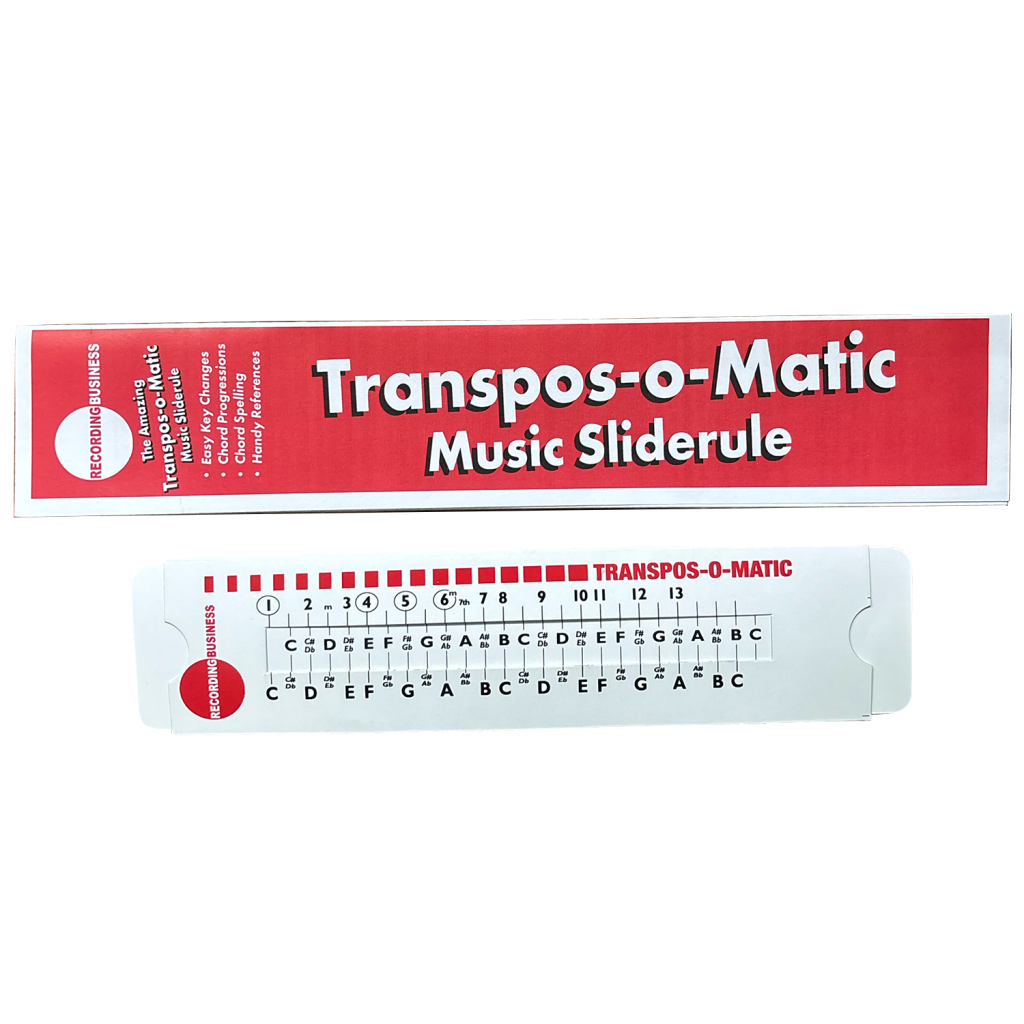
The Transpos-O-Matic solves this without any mental gymnastics.
This clever tool designed by David McCord lets you visually map chords from one key to another in seconds. Instead of manually counting half steps or searching for a transposition chart online, you simply align the keys and read off the corresponding chords. It’s the kind of tool that becomes indispensable the moment you use it especially in live rehearsal or session situations where time is short and precision matters.
Why musicians love it:
- No theory knowledge required. It works even if you don’t know why the chords correspond
- Fast and portable. No app, no battery, no distraction
- Useful for any instrument. Piano, guitar, ukulele, bass, brass, you name it!
- Great for teaching. Music educators can use it to quickly demonstrate key relationships to students
If you regularly collaborate, cover songs, or play in multiple keys, the Transpos-O-Matic belongs in your gig bag right next to your tuner.
2. Chordii Roman Numeral Music Theory Wheel: Master the Language of Music Theory
Best for: Songwriters, music students, and anyone learning to compose or analyze music
There’s a reason music theory professors teach in Roman numerals. The Nashville Number System and Roman numeral analysis are the universal language of chord relationships, they let you describe a song’s harmonic structure in a way that applies across every key.
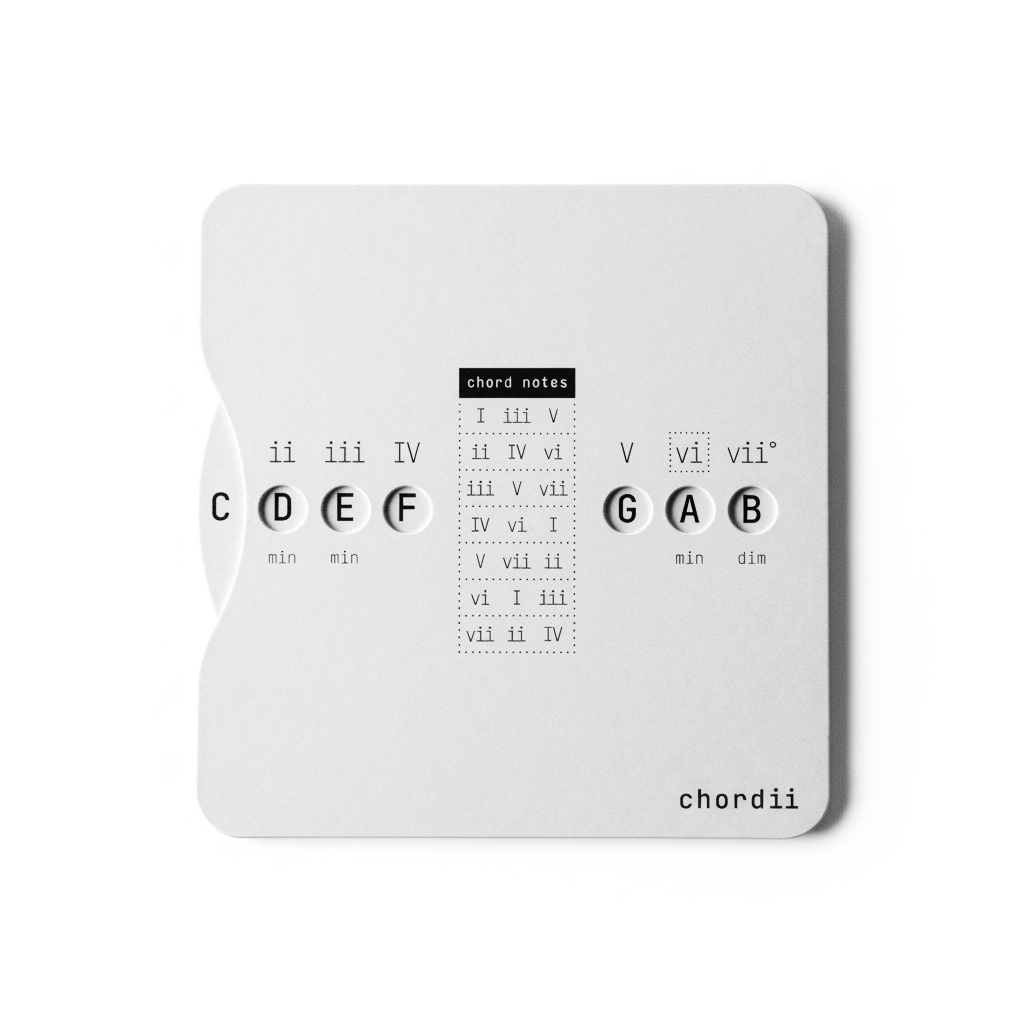
Once you understand that a I–IV–V progression is the backbone of the blues, or that a I–V–vi–IV is behind hundreds of pop hits, you stop thinking in terms of specific chords and start thinking in terms of relationships. That’s when songwriting clicks.
The Chordii Roman Numeral Music Theory Wheel is a physical music theory tool that makes this framework accessible, visual, and fast. Rather than staring at a chart or trying to memorize every diatonic chord in every key, you use Chordii Roman to see the relationships clearly and intuitively.
What makes Chordii Roman stand out:
- Visual and tactile. You learn faster when you can touch and interact with the concept
- Works in any key. the Roman numeral system is the same regardless of root note
- Bridges theory and practice. Ideal for anyone who wants to understand why chord progressions work, not just memorize them
- Songwriting tool. Use it to build progressions intentionally instead of stumbling onto them by accident
It doesn’t matter if you’re a self-taught musician trying to make sense of music theory, or a classically trained player looking for a faster compositional workflow, Chordii Roman gives you a hands-on way to internalize one of music’s most powerful frameworks.
3. Blank Sheet Music – Manuscript Paper (40 Sheets) Loose Leaf 12-Staff Paper
Best for: Composers, arrangers, music students, and anyone who writes music by hand
In a world of notation software and DAWs, there’s something that never goes out of style: writing music by hand.
Dozens of studies on learning and creativity point to the same conclusion, the physical act of writing engages different cognitive processes than typing or clicking. For musicians, this means sketching chord voicings, writing out progressions, or notating a melody by hand can actually deepen your understanding and memory of the music.
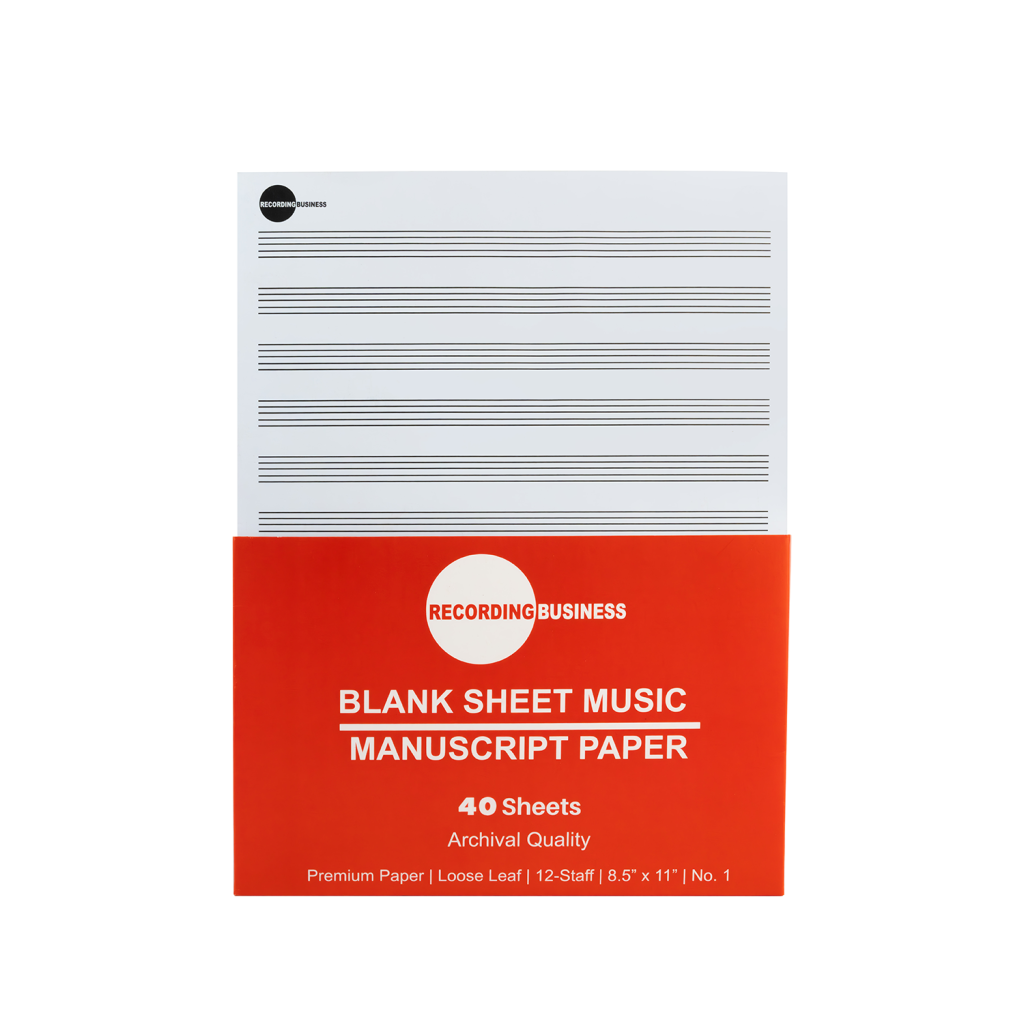
Our Blank Sheet Music – Manuscript Paper (40 Sheets) is premium loose-leaf 12-staff paper designed for serious use. With 40 sheets and 12 staves per page, you have serious space to work, if you’re composing a multi-part arrangement, sketching chord charts for a session, or working through voice leading exercises.
Why this manuscript paper deserves a spot on your music desk:
- 12 staves per page. More room to work than standard 8- or 10-staff options
- Loose leaf format. Organize your work by project, rearrange pages, and share individual sheets easily
- 40 sheets. Enough for a serious composition project or an extended period of daily practice
- Clean, crisp printing. Staff lines that are easy to read and write on without bleed-through
- Versatile. Works for melody writing, chord charts, rhythmic exercises, or full orchestration sketches
There’s a reason professional composers, arrangers, and music educators still keep manuscript paper on their desks. It’s distraction-free, always available, and there’s a creative freedom in a blank staff that no software fully replicates.
Pair it with a good pencil and your Chordii Roman tool, and you have an analog composition setup that’s hard to beat.
Here’s how these three tools work beautifully as a system:
1. Start with Chordii Roman to build or analyze a chord progression using Roman numerals. Decide your harmonic structure in the abstract, “I’m going I–vi–IV–V”, before committing to a key.
2. Use the Transpos-O-Matic to find the key that works best for your singer or your instrument’s range. Instantly see what those Roman numeral chords translate to in D, G, Bb, or wherever you land.
3. Grab your Manuscript Paper and write it all out, the chord symbols, the melody, the rhythm, the voicings. Get it on paper so you have a permanent creative record.
This is a low-tech, high-creativity workflow that keeps you focused on the music rather than the tools.
Understanding chords, how to use them, move between them, and write with them is one of the most transformative skills a musician can develop. But theory doesn’t have to be intimidating, and you don’t need a laptop open to unlock it.
The Transpos-O-Matic, Chordii Roman, and Blank Sheet Music Manuscript Paper are three tools built around that philosophy: make music theory accessible, keep musicians in their creative flow, and give every player, beginner or pro, the means to work confidently with chords.
Browse Music Theory Products on the Recording Business Store
PRE-ORDER RECORDING BUSINESS DICTIONARY